21 July 2026
Auckland Travel Guide: Where to Stay, What to See, and How to Get Around
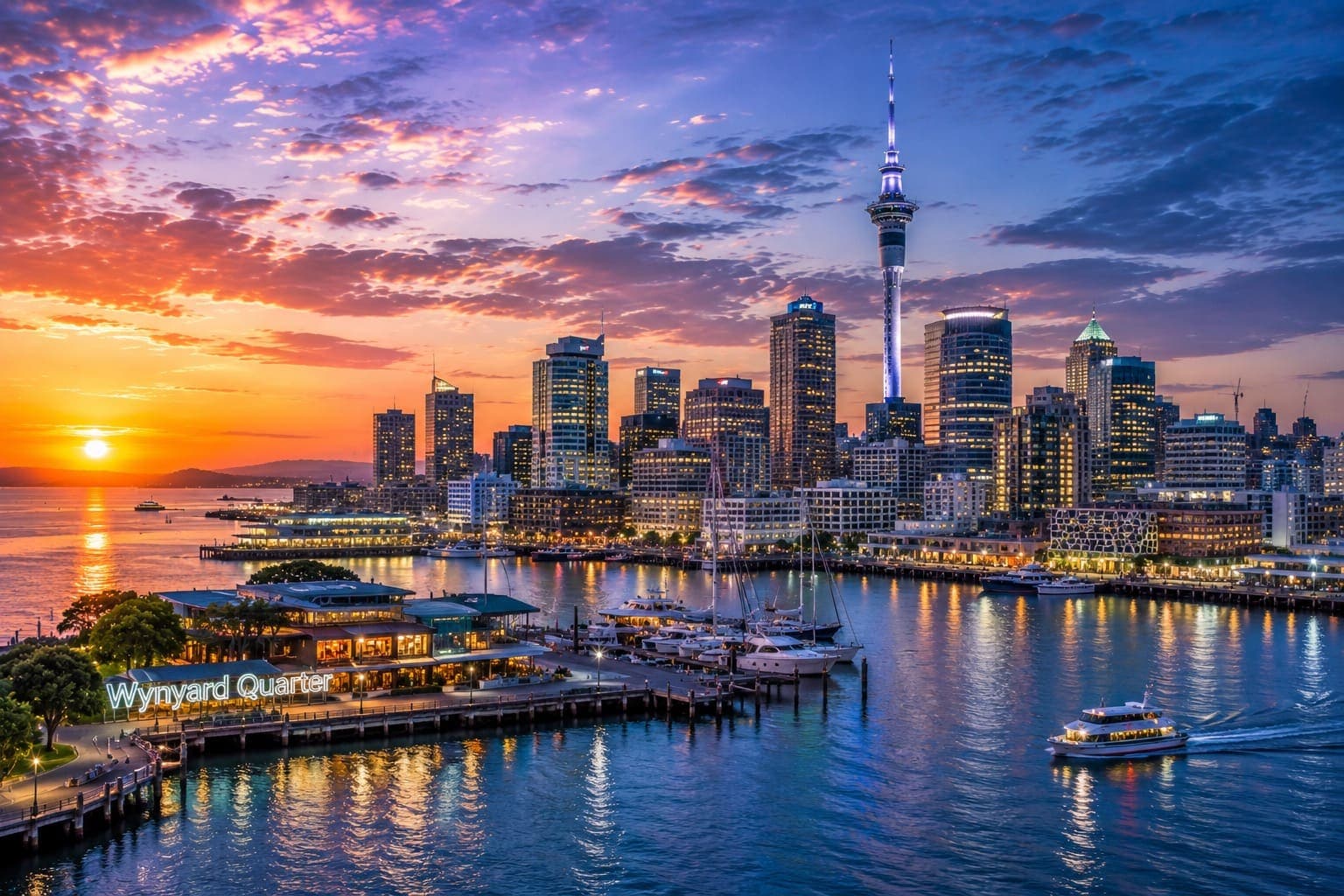
Auckland is New Zealand's largest city and most visitors' entry point to the country, built across an isthmus between two harbours with volcanic cones dotted throughout the urban landscape. It's less a single-destination city than a well-connected base — most travellers use it as the start or end of a wider New Zealand trip, though it holds its own for a couple of days.
How to Reach Auckland
Auckland Airport (AKL) is New Zealand's main international gateway, about 20–30 minutes from the city centre by taxi or the SkyBus airport shuttle. Most visitors need a New Zealand Electronic Travel Authority (NZeTA), a straightforward online application for eligible passport holders; check New Zealand's official immigration requirements for your specific passport.
Best Time to Visit Auckland
December to February (summer) offers the warmest, driest weather, popular for beaches and outdoor activities — also the busiest season. March to May and September to November offer milder weather with fewer crowds. June to August (winter) is cooler and wetter but rarely extreme, and a quieter time to visit.
Top Areas to Stay in Auckland
CBD (Downtown) — central, walkable to the waterfront and Sky Tower, convenient for a short stay.
Ponsonby — a trendy inner suburb with a strong café and restaurant scene, a short drive or bus ride from the CBD.
Mission Bay/Devonport — beachfront or harbourside options with a more relaxed pace, Devonport reached by a short scenic ferry.
Top Landmarks in Auckland
Sky Tower — the tallest structure in the Southern Hemisphere, with an observation deck and optional SkyJump for those wanting an adrenaline rush.
Auckland War Memorial Museum — set in the Auckland Domain park, covering Māori and Pacific culture alongside natural history and war history exhibits.
Waiheke Island — a 40-minute ferry from downtown, known for vineyards, beaches, and a relaxed island pace.
Mount Eden (Maungawhau) — one of Auckland's volcanic cones, a short walk to the crater rim for panoramic city views.
Viaduct Harbour — a waterfront dining and entertainment precinct, popular in the evenings.
How to Get Around Auckland
Buses and trains cover the city reasonably well using an AT HOP card, though Auckland is more car-dependent than many global cities its size. Ferries connect the CBD to Devonport, Waiheke Island, and other harbourside spots, and are both practical and scenic. Ride-hailing apps (Uber, Ola) operate widely.
Food to Try in Auckland
- Fish and chips — best enjoyed at a harbourside or beach spot
- Meat pies — a classic New Zealand casual food staple
- Pavlova — a meringue-based dessert claimed by both New Zealand and Australia
- Hangi — a traditional Māori method of cooking food in an underground pit, available at some cultural experiences and restaurants
- Craft coffee culture — Auckland has a strong café scene, similar in spirit to Australia's
Shopping in Auckland
- Queen Street — the main CBD shopping strip
- Ponsonby Road — boutique and design-focused shopping
- Otara Market (Saturdays) — a Pacific and Māori-focused market for produce and crafts
Festivals & Events in Auckland
- Auckland Anniversary Day (late January) — a regional public holiday marked by events across the city
- Pasifika Festival (March) — one of the world's largest celebrations of Pacific Island culture
- Diwali and Lunar New Year festivals — reflecting Auckland's significant Indian and Chinese communities, celebrated with citywide events
Nearby Day Trips from Auckland
- Waiheke Island — about 40 minutes by ferry, vineyards and beaches
- Waitomo Caves — around 2.5 hours away, known for glowworm cave tours
- Bay of Islands — roughly 3.5 hours away, a popular multi-day trip for sailing and marine life
Local Customs and Etiquette
- Tipping is not expected in the same way as the US, though rounding up or a small tip for exceptional service is appreciated
- Māori culture is a significant part of New Zealand identity — a respectful interest in it (and correct pronunciation of Māori place names where possible) is appreciated
- Sun protection — UV levels in New Zealand are notably strong; sunscreen is standard practice even on cooler days
A Few Practical Tips
- Budgeting — a hostel bed runs roughly NZD 35–55 ($21–33) a night, mid-range hotels NZD 180–280 ($110–170), and upscale stays upward of NZD 350 ($210+).
- Auckland as a gateway — many visitors spend just 1–2 nights here before heading elsewhere in New Zealand; plan accordingly if the city itself isn't the main focus.
- Weather changes quickly — pack layers even in summer, since conditions can shift within a day.
FAQ
How many days do you need in Auckland? Two to three days covers the city itself; most visitors use it as a gateway before heading to other parts of New Zealand, so it's rarely the sole destination of a trip.
Do I need a visa to visit Auckland? Most visitors need a New Zealand Electronic Travel Authority (NZeTA), a straightforward online application for eligible passport holders; check New Zealand's official immigration requirements for your specific passport.
Is Auckland safe for solo travellers? Yes — New Zealand is considered one of the safer countries globally, with standard city precautions applying in central Auckland at night.
Is Auckland a good base for exploring New Zealand? Yes — it's the main international gateway and a common starting or ending point for wider North Island or South Island itineraries, given its major airport.
What's the one thing people skip but shouldn't? Waiheke Island — a 40-minute ferry ride from downtown Auckland to a laid-back island known for vineyards and beaches, often overlooked in favour of city-only itineraries.
HostOps is expanding beyond India — see what's live now
Browse stays →