21 July 2026
Bangkok Travel Guide: Where to Stay, What to See, and How to Get Around
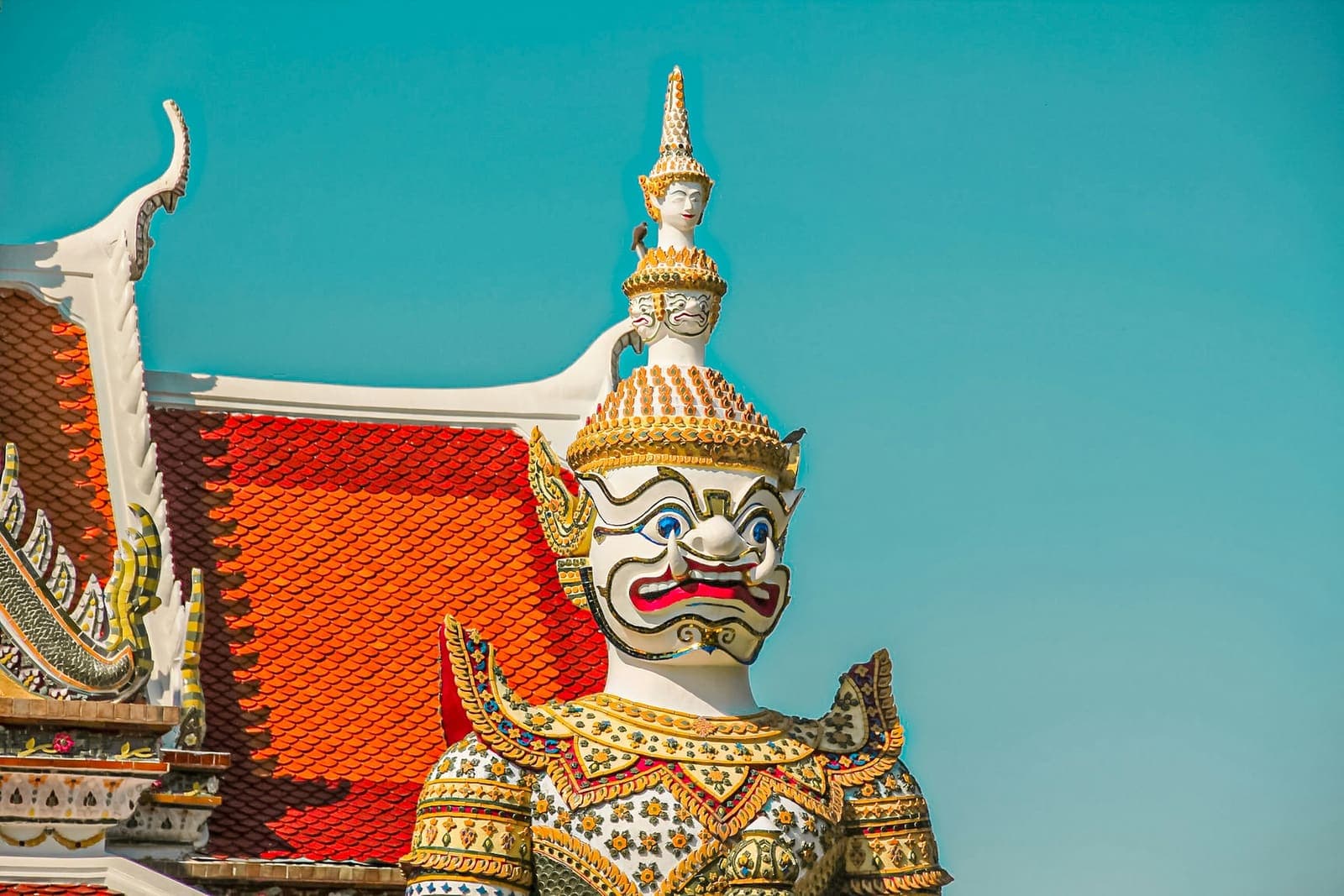
Bangkok is Thailand's chaotic, glittering capital, and it's usually the first stop for anyone travelling through Southeast Asia. Gold-spired temples sit a few streets from rooftop bars, floating markets run parallel to air-conditioned malls, and the street food is good enough that some visitors barely eat in a restaurant the whole trip. It's also an easy city to navigate as a first-timer — well connected, used to tourists, and cheap enough that mistakes don't cost much.
This guide covers what you actually need before you book a stay — where to base yourself, what's worth your time, how to move around, and a few things nobody tells you until you're already there.
How to Reach Bangkok
- By air — Suvarnabhumi Airport (BKK) handles most international flights; Don Mueang (DMK) handles many budget carriers. Both connect to the city easily.
- Airport Rail Link connects Suvarnabhumi to central Bangkok in about 30 minutes and is the cheapest way in. Grab or a metered taxi is more convenient with luggage.
- By land — Bangkok is well connected by bus and train to neighbouring countries and other Thai cities, making it a natural hub for a wider Southeast Asia itinerary.
- Visa note — many nationalities, including most Western passport holders, can enter Thailand visa-free for tourism for a set number of days. Rules vary by nationality and change periodically, so check Thailand's official immigration site close to your travel date.
Best Time to Visit Bangkok
November to February is the coolest, driest stretch — daytime temperatures around 26–32°C (79–90°F) and lower humidity, making it the most comfortable time to walk around temples and markets. It's also peak season, so book stays a little ahead.
March to May is hot season, with temperatures regularly above 35°C (95°F) and high humidity. Plan outdoor sightseeing for morning or evening, and prioritise a stay with strong AC.
June to October is the rainy season — expect short, heavy downpours most days rather than constant rain. Prices drop and crowds thin out, but flooding can occasionally disrupt street-level areas.
Top Areas to Stay in Bangkok
Sukhumvit — Bangkok's modern core, packed with malls, BTS stations, restaurants, and nightlife. Good for first-timers who want convenience and don't mind a more commercial feel.
Silom / Sathorn — Bangkok's business district, quieter at night, close to Lumpini Park and well connected by both BTS and MRT. A solid middle-ground choice.
Khao San Road / Banglamphu — the backpacker heart of the city, cheap guesthouses, hostels, and constant street-level energy. Close to the Grand Palace and old city temples, but noisy at night.
Riverside / Chinatown (Yaowarat) — atmospheric, food-focused, and close to the river boats and older temples. Less convenient for BTS/MRT access, more character.
Thonglor / Ekkamai — a quieter, more residential pocket popular with expats, known for cafés and a slower pace, a bit further from the main tourist sights.
For most first-time visitors, Sukhumvit or Silom gives the best mix of easy transport and things within walking distance.
Top Landmarks in Bangkok
Grand Palace — the ceremonial heart of Thailand, a dazzling complex of gilded spires and halls that also houses the Temple of the Emerald Buddha. Go early and dress modestly — shoulders and knees covered are required for entry.
Wat Arun (Temple of Dawn) — a striking riverside temple best photographed from across the water at sunset, or climbed close-up for river views.
Wat Pho — home to the enormous Reclining Buddha and one of the best traditional Thai massage schools in the country.
Chatuchak Weekend Market — one of the world's largest markets, thousands of stalls covering everything from clothing to antiques; weekends only.
Chao Phraya River — the express boats double as a cheap, scenic way to see riverside temples and old neighbourhoods most tourists miss by staying on the BTS.
Jim Thompson House — a quiet, well-preserved traditional Thai house museum, a good contrast to the temple circuit.
How to Get Around Bangkok
BTS Skytrain and MRT — Bangkok's elevated and underground rail lines cover most of the tourist and business areas and are the fastest way to avoid traffic. Get a Rabbit card for the BTS to skip queuing for single tickets.
Grab — the regional ride-hailing app, reliable and takes the haggling out of getting around, especially useful outside rail coverage.
Tuk-tuks — fun for a short novelty ride, but agree a price before getting in; they're rarely cheaper than Grab for longer distances.
Chao Phraya Express Boats — a cheap, scenic way to reach riverside temples and Chinatown, and a good break from road traffic.
Food to Try in Bangkok
- Pad Thai — stir-fried noodles with egg, tofu or shrimp, and tamarind sauce, sold everywhere from street carts to restaurants
- Tom Yum Goong — hot and sour prawn soup, one of Thailand's signature dishes
- Mango sticky rice — sweet coconut rice with fresh mango, a classic dessert found at most street stalls
- Boat noodles — rich, intensely flavoured noodle soup, traditionally served in small portions from canal-side vendors
- Som Tam — spicy green papaya salad, adjustable in spice level if you ask
Shopping in Bangkok
- Chatuchak Weekend Market — the big one, everything from clothing and homeware to antiques and pets, best tackled with a plan since it's easy to get lost in
- Chinatown (Yaowarat) — gold shops, traditional medicine stores, and some of the city's best street food, all in one dense strip
- MBK Center — an indoor mall-market hybrid, good for electronics, souvenirs, and bargaining practice in an air-conditioned setting
- Tailoring — Bangkok has a large custom tailoring industry; quality varies widely, so go on recommendations rather than street touts
Festivals & Events in Bangkok
- Songkran (mid-April) — Thailand's New Year, celebrated with city-wide water fights; joyful but expect the whole city to be soaked and many shops closed
- Loy Krathong (November) — a lantern and floating-offering festival, with small candlelit krathongs set adrift on the river, especially beautiful at night
- Chinese New Year (January/February) — Chinatown comes alive with lion dances, lights, and food stalls
Nearby Day Trips from Bangkok
- Ayutthaya — around 1.5 hours away, the ruins of Thailand's former capital, a UNESCO World Heritage site of ancient temple complexes
- Damnoen Saduak Floating Market — about 1.5–2 hours away, a classic (if touristy) floating market experience, best visited early morning
- Amphawa — a quieter, more local floating market a bit further out, popular for a weekend evening trip with fewer crowds than Damnoen Saduak
Local Customs and Etiquette
- Dress modestly at temples and the Grand Palace — shoulders and knees covered, and shoes removed before entering most temple buildings
- The wai greeting (palms pressed together, slight bow) is the traditional greeting — you're not expected to initiate it as a visitor, but returning one is polite
- Avoid touching people's heads, considered the most sacred part of the body in Thai culture, and avoid pointing your feet at people or Buddha images, since feet are considered the lowest and least respectful part of the body
- The monarchy is deeply respected — avoid any casual or joking remarks about the royal family
- Remove shoes when entering someone's home and many small shops and guesthouses
A Few Practical Tips
- Budgeting — a budget hostel bed runs roughly ฿300–600 ($9–17) a night, a mid-range hotel room ฿1,500–3,500 ($43–100), and upscale stays upward of ฿5,000 ($140+). Add roughly ฿800–1,200 ($23–34) a day for food, transport, and entry tickets on a budget trip.
- SIM cards — prepaid tourist SIMs (AIS, TrueMove, dtac) are available at the airport and convenience stores, and are inexpensive for the data you get.
- Tipping — not obligatory but appreciated; rounding up or leaving small change is common practice rather than a fixed percentage.
- Tap water — stick to bottled or filtered water; it's cheap and available everywhere.
FAQ
How many days do you need in Bangkok? Three full days covers the major temples, markets, and a river trip comfortably. Two works if you're just passing through on a wider Southeast Asia trip.
Is Bangkok safe for solo travellers? Yes, generally — it's one of Southeast Asia's most visited and tourist-familiar cities. Usual precautions apply: use metered taxis or Grab rather than unmetered tuk-tuks for longer trips, and keep an eye on belongings in crowded markets and on the BTS.
Do I need a visa to visit Bangkok? Many nationalities, including most Western passport holders, can enter Thailand visa-free for a set number of days for tourism. Rules vary by nationality and change periodically, so it's worth checking Thailand's official immigration site close to your travel date.
What's the best way to get from the airport to the city? The Airport Rail Link connects Suvarnabhumi Airport (BKK) to central Bangkok in about 30 minutes and is the cheapest option. Grab or a metered taxi is more convenient with luggage and costs a bit more.
What's the one thing people skip but shouldn't? A river trip on the Chao Phraya Express Boat. Most itineraries focus on the Grand Palace and Khao San Road and never actually get out onto the river, which is one of the best ways to see the city's temples and old riverside neighborhoods.
HostOps is expanding beyond India — see what's live now
Browse stays →