21 July 2026
Dubai Travel Guide: Where to Stay, What to See, and How to Get Around
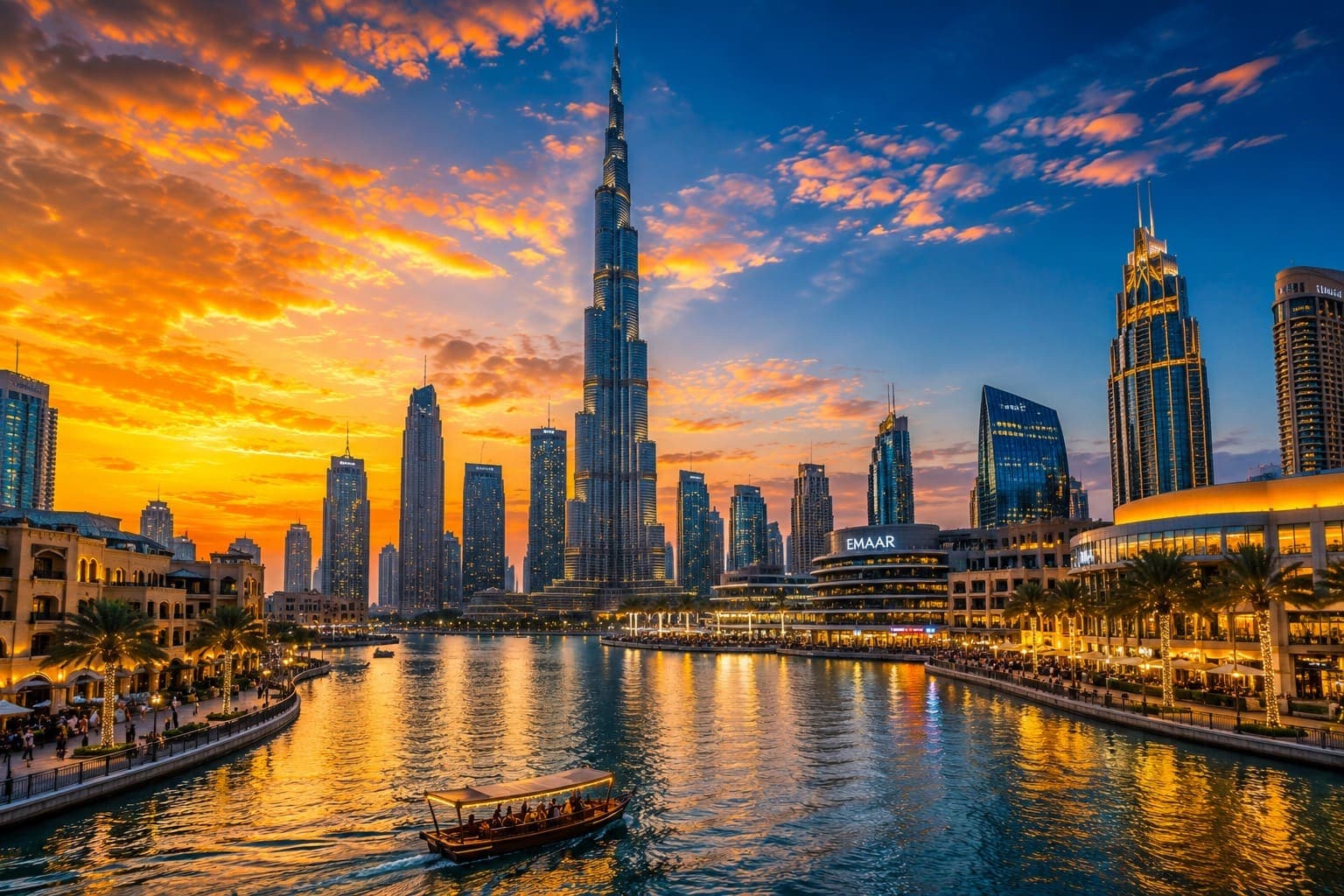
Dubai has built itself into one of the world's most visited cities in a few decades — record-breaking towers, artificial islands, and enormous malls sit alongside a much older trading-post history along Dubai Creek. It's an easy city for first-time visitors: modern infrastructure, English widely spoken, and a well-organised tourism industry.
How to Reach Dubai
Dubai International Airport (DXB) is one of the world's busiest hubs, with extensive global connections. The Dubai Metro connects directly to the airport, making it easy to reach the city without a taxi. Many nationalities, including most Western passport holders, receive visa-on-arrival or visa-free entry for tourism; check the UAE's official rules for your specific passport.
Best Time to Visit Dubai
November to March is the most comfortable season, with daytime temperatures around 24–30°C (75–86°F) — also peak tourist season. June to September is extremely hot, often exceeding 40°C (104°F), making outdoor activities largely impractical outside air-conditioned spaces; prices drop significantly in this off-season.
Top Areas to Stay in Dubai
Downtown Dubai — home to the Burj Khalifa and Dubai Mall, central and convenient but among the pricier areas.
Dubai Marina — a modern waterfront district with a walkable promenade, restaurants, and beach access nearby.
Jumeirah Beach Residence (JBR) — beachfront, casual, popular with families.
Deira/Bur Dubai (Old Dubai) — more traditional, near the creek, souks, and historic architecture, better value than the newer districts.
Top Landmarks in Dubai
Burj Khalifa — the world's tallest building; book the "At the Top" observation deck tickets in advance, ideally for sunset.
Dubai Mall — one of the world's largest malls, with an aquarium, ice rink, and the Dubai Fountain show outside.
Palm Jumeirah — the artificial palm-shaped island, best appreciated from a boat tour, the Aquaventure waterpark, or a rooftop viewpoint.
Al Fahidi Historic District & Dubai Creek — old Dubai's wind-tower architecture and an abra (traditional boat) ride across the creek to the gold and spice souks.
Museum of the Future — a striking architectural landmark with exhibits on future technology and sustainability.
How to Get Around Dubai
The Dubai Metro is clean, efficient, and connects the airport, Downtown, Marina, and much of the new city. Taxis and ride-hailing apps (Careem, Uber) are widely used and reasonably priced for areas the metro doesn't reach. Distances between districts can be significant, so plan transport time between very different areas of the city.
Food to Try in Dubai
- Shawarma — widely available, from casual stalls to sit-down restaurants
- Machboos — a spiced rice dish with meat or fish, a traditional Emirati staple
- Al Fahidi/Old Dubai food tours — cover the spice souk and traditional Emirati dishes in one outing
- International dining — Dubai has an enormous range of global cuisine, reflecting its very international population
Shopping in Dubai
- Dubai Mall & Mall of the Emirates — flagship international retail and entertainment
- Gold Souk — a dense market of gold jewellery shops in Deira, bargaining expected
- Spice Souk — traditional spices, dried fruits, and herbs near the creek
Festivals & Events in Dubai
- Dubai Shopping Festival (December–January) — city-wide retail promotions, fireworks, and entertainment
- Dubai Food Festival (varies) — a season celebrating the city's dining scene with special menus and events
- Ramadan — a significant period with adjusted business hours and public dining etiquette (eating/drinking in public during fasting hours is restricted) if visiting during this time
Nearby Day Trips from Dubai
- Abu Dhabi — about 1.5 hours away, home to Sheikh Zayed Grand Mosque and the Louvre Abu Dhabi
- Hatta — around 1.5 hours away, a mountain enclave popular for hiking, kayaking, and cooler air away from the city
- Desert safari — typically a half-day or overnight excursion into the surrounding dunes, widely offered from the city
Local Customs and Etiquette
- Dress modestly in public areas — while beach and pool areas are more relaxed, shoulders and knees covered is expected in malls, markets, and religious sites
- Public displays of affection are best kept minimal, in line with local norms
- Alcohol is only served in licensed venues (hotels, some restaurants and bars), not general shops in most emirates
- Ramadan etiquette — avoid eating, drinking, or smoking in public during fasting hours if visiting during this period
A Few Practical Tips
- Budgeting — a budget hotel room runs roughly AED 150–300 ($40–80) a night, mid-range hotels AED 400–800 ($110–220), and luxury stays upward of AED 1,200 ($325+).
- Tipping — not obligatory but appreciated, typically 10-15% at restaurants if service isn't already included.
- Public transport cards (Nol card) are needed for the metro and buses.
FAQ
How many days do you need in Dubai? Three to four days covers the main landmarks, a desert excursion, and some beach or mall time without rushing.
Do I need a visa to visit Dubai? Many nationalities, including most Western passport holders, receive visa-on-arrival or free entry for tourism. Check UAE's official immigration rules for your specific passport before travelling.
Is Dubai safe for solo travellers? Yes — Dubai has a very low crime rate. The main things to be mindful of are local laws around alcohol, public behaviour, and dress, which are stricter than in many Western cities.
What's the best way to get around Dubai? The Dubai Metro is clean, efficient, and covers most major tourist areas; taxis and ride-hailing apps (Careem, Uber) are widely available for anywhere the metro doesn't reach.
What's the one thing people skip but shouldn't? Old Dubai — Al Fahidi Historic District and the abra boat crossing on Dubai Creek — most itineraries focus entirely on the new city and skip the older, more traditional side entirely.
HostOps is expanding beyond India — see what's live now
Browse stays →