21 July 2026
Marrakech Travel Guide: Where to Stay, What to See, and How to Get Around
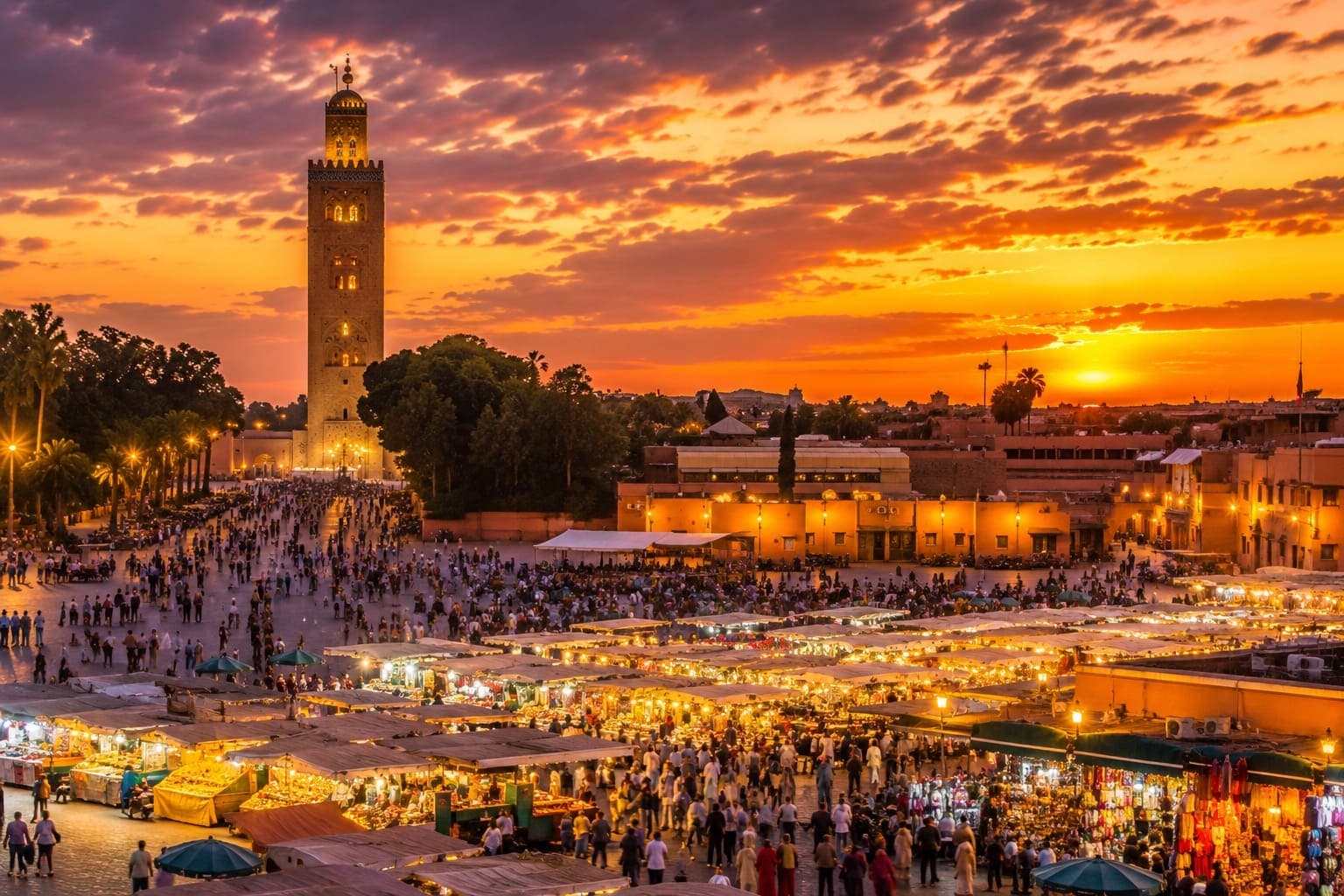
Marrakech is Morocco's most visited city, and its old medina lives up to the reputation — a dense maze of souks, riads, and squares that feels genuinely different from anywhere in Europe just a short flight away. It's a sensory city: the smell of spice markets, the call to prayer, the constant motion of Jemaa el-Fnaa square after dark.
How to Reach Marrakech
Marrakech Menara Airport (RAK) connects to major European cities and a growing number of long-haul routes, with a short 15–20 minute taxi ride to the medina. Many nationalities, including most Western passport holders, don't need a visa for short tourist stays; check Morocco's official entry requirements for your specific passport.
Best Time to Visit Marrakech
March to May and September to November offer the most comfortable weather, with warm days and cool evenings. June to August is very hot, often exceeding 40°C (104°F), making midday sightseeing uncomfortable. December to February is mild during the day but can be cold at night, especially in riads without central heating.
Top Areas to Stay in Marrakech
Medina (old city) — the atmospheric heart of Marrakech, home to most riads, souks, and Jemaa el-Fnaa square; staying here means constant immersion but also noise and a maze-like layout that takes a day or two to navigate confidently.
Gueliz (new town) — modern, more Western-style amenities, wider streets, easier for those wanting a calmer base with easy taxi access to the medina.
Palmeraie — an oasis area on the outskirts known for resort-style stays and golf courses, quieter but further from the main sights.
Top Landmarks in Marrakech
Jemaa el-Fnaa — the main square, chaotic by day with snake charmers and orange juice stalls, transforming into a huge open-air food market by night.
Majorelle Garden — a striking cobalt-blue garden designed by Jacques Majorelle, later owned by Yves Saint Laurent; visit right at opening to avoid the worst crowds.
Bahia Palace — an ornate 19th-century palace with detailed tilework and courtyards, a good introduction to Moroccan architecture.
Koutoubia Mosque — the city's largest mosque and a key landmark for orientation within the medina (non-Muslims can't enter but the exterior and gardens are worth seeing).
The Souks — a dense network of markets selling everything from spices to leather goods to lanterns, organised loosely by trade.
How to Get Around Marrakech
Walking is the only practical way to explore the medina's narrow lanes, many too tight for vehicles. Petit taxis are the standard way to travel between the medina and Gueliz or other outer areas — agree on a price or insist on the meter. Ride-hailing apps have limited operation in Marrakech compared to other cities, so taxis remain the default.
Food to Try in Marrakech
- Tagine — a slow-cooked stew named after the conical clay pot it's cooked in, available in countless variations
- Couscous — traditionally a Friday dish, served with vegetables and meat
- Mint tea — Morocco's signature drink, sweet and served throughout the day
- Pastilla — a sweet-and-savoury pastry, traditionally filled with pigeon or chicken
- Jemaa el-Fnaa food stalls — an evening food market experience, best approached by picking a busy stall
Shopping in Marrakech
- The Souks — leather goods, lanterns, textiles, and spices; bargaining is expected and part of the experience
- Ensemble Artisanal — a government-run craft centre with fixed prices, useful for a sense of fair pricing before bargaining elsewhere
Festivals & Events in Marrakech
- Marrakech International Film Festival (November/December) — draws international film industry figures and screenings
- Ramadan — a significant period with adjusted business hours; many restaurants open later, and daytime street food stalls may be less active
Nearby Day Trips from Marrakech
- Atlas Mountains — about 1–1.5 hours away, popular for hiking and visiting Berber villages
- Essaouira — around 2.5–3 hours away, a laid-back coastal town with a distinct, more relaxed atmosphere than Marrakech
- Agafay Desert — roughly 45 minutes away, a rocky desert landscape popular for a half-day or overnight excursion without the longer trip to the Sahara
Local Customs and Etiquette
- Dress modestly, particularly outside resort areas — shoulders and knees covered is respectful, especially for women
- Bargaining is expected in the souks — starting around a third of the quoted price and settling in the middle is common practice
- Be firm but polite with touts and unsolicited guides in the medina; a clear "no thank you" repeated works better than extended engagement
A Few Practical Tips
- Budgeting — a budget riad room runs roughly 200–400 MAD ($20–40) a night, mid-range riads 500–1,200 MAD ($50–120), and luxury riads upward of 1,500 MAD ($150+).
- Cash — carry small bills for tipping and small purchases in the souks, since many small vendors don't take cards.
- Riad navigation — save your riad's location and a nearby landmark, since medina addresses are hard to navigate by map alone.
FAQ
How many days do you need in Marrakech? Three days covers the medina, souks, and a garden or two comfortably. Add a day for a day trip to the Atlas Mountains or a desert excursion.
Should I stay in a riad? Yes, for at least part of the trip — riads (traditional courtyard houses converted into guesthouses) are one of the most distinctive parts of a Marrakech stay, usually found inside the medina walls.
Is Marrakech safe for solo travellers? Yes, generally, though the medina's narrow, winding lanes can be disorienting and persistent touts are common in tourist areas — polite firmness usually works better than engaging at length.
Do I need a visa to visit Marrakech? Many nationalities, including most Western passport holders, don't need a visa for short tourist stays in Morocco; check Morocco's official entry requirements for your specific passport.
What's the one thing people skip but shouldn't? The Majorelle Garden early in the morning, right at opening — most visitors arrive mid-morning when it's already crowded with tour groups.
HostOps is expanding beyond India — see what's live now
Browse stays →