21 July 2026
Rome Travel Guide: Where to Stay, What to See, and How to Get Around
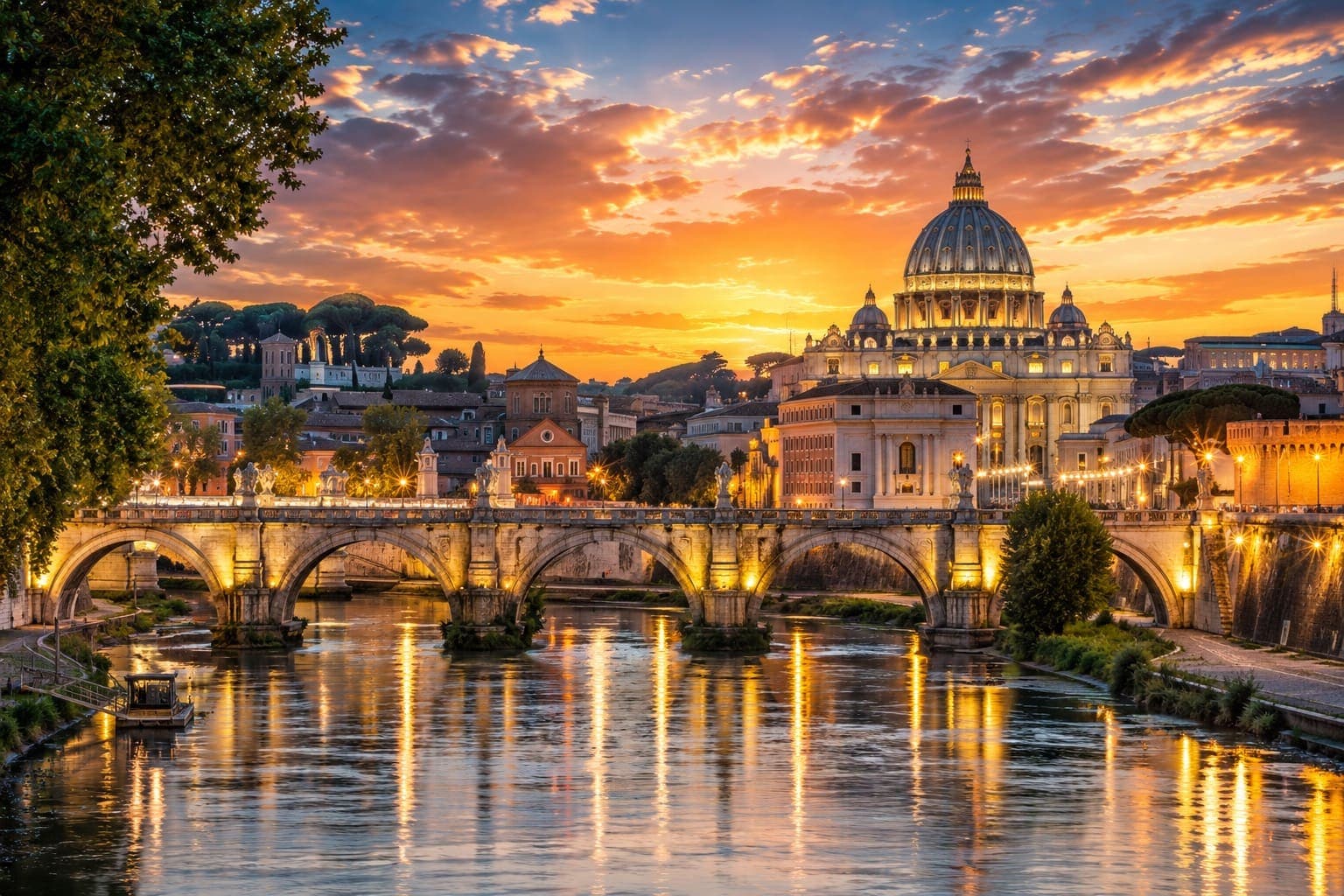
Rome layers three thousand years of history into one walkable city — ancient ruins sit beside Renaissance churches, which sit beside everyday apartment buildings with laundry hanging out to dry. It's dense, chaotic in the best way, and rewards slow wandering as much as ticking off famous sites.
How to Reach Rome
Fiumicino Airport (FCO) is the main international gateway, connected to central Rome by the Leonardo Express train (about 32 minutes) or regional trains and buses. Ciampino Airport (CIA) handles many budget carriers and is connected by bus to the centre. High-speed trains connect Rome to Florence, Milan, Naples, and other major Italian cities.
Best Time to Visit Rome
April to June and September to October offer the best weather and manageable crowds. July and August are hot (often 35°C+/95°F+) and heavily crowded with tourists, though many Romans leave the city on holiday in August. Winter (November–March) is quieter and cooler, with occasional rain, and a good time for museum-focused visits.
Top Areas to Stay in Rome
Centro Storico — the historic centre, walking distance to the Pantheon, Piazza Navona, and Trevi Fountain, very central but pricier.
Trastevere — cobblestone streets, strong local character, excellent restaurants, across the river but an easy walk to the centre.
Prati — quieter, residential, close to the Vatican, well connected by metro, good value for money.
Monti — trendy, close to the Colosseum, mixes ancient sites with a hip café and boutique scene.
Top Landmarks in Rome
Colosseum & Roman Forum — book combined tickets online in advance; the Forum takes at least 2 hours to explore properly.
Vatican Museums & Sistine Chapel — an enormous collection culminating in Michelangelo's ceiling; book a timed entry to skip the worst queues.
Pantheon — remarkably preserved ancient temple, free to enter, best visited early morning before tour groups arrive.
Trevi Fountain — most photographed at night when crowds thin and it's lit up.
Piazza Navona — a lively baroque square with street performers and cafés, good for an evening wander.
How to Get Around Rome
Rome's historic centre is largely walkable, and the best way to see it. The Metro (two main lines, A and B) covers longer distances but doesn't reach every corner of the centre due to archaeological preservation limits underground. Buses and trams fill the gaps. Taxis and ride-hailing apps are widely available for late-night or luggage-heavy trips.
Food to Try in Rome
- Cacio e Pepe — a simple, iconic Roman pasta of cheese and black pepper
- Carbonara — the real version, no cream, just egg, cheese, guanciale, and pepper
- Supplì — fried rice balls with a mozzarella centre, a classic Roman street snack
- Roman-style pizza — thin and crispy, often sold by weight from a slice shop
- Gelato — look for artisanal shops (gelateria artigianale) rather than bright, piled-high displays
Shopping in Rome
- Via del Corso — main shopping street for mid-range fashion
- Via dei Condotti — luxury fashion boutiques near the Spanish Steps
- Campo de' Fiori market — a lively morning market for local produce and goods
Festivals & Events in Rome
- Natale di Roma (21 April) — celebrating the city's founding with parades and historical reenactments
- Easter in Vatican City — major religious ceremonies draw large crowds; book accommodation well ahead if visiting then
- Estate Romana (summer) — a season-long program of outdoor concerts, film screenings, and cultural events across the city
Nearby Day Trips from Rome
- Ostia Antica — about 30 minutes away, remarkably preserved ancient Roman port ruins with far fewer crowds than central Rome's sites
- Tivoli — around 1 hour away, home to the Villa d'Este gardens and Hadrian's Villa
- Pompeii — a longer day trip (about 2.5 hours), the famously preserved ancient city near Naples
Local Customs and Etiquette
- Dress modestly at churches and the Vatican — shoulders and knees covered are typically required for entry
- Coffee culture — espresso is drunk standing at the bar, quickly; cappuccino is generally a morning-only order in Italian custom
- Meal timing — restaurants often don't open for dinner until 7:30–8pm; many close between lunch and dinner service
A Few Practical Tips
- Budgeting — a hostel bed runs roughly €25–45 a night, mid-range hotels €90–180, and upscale stays upward of €220.
- Book major sites in advance — Colosseum, Vatican Museums, and Borghese Gallery all benefit from timed online tickets.
- Tap water is safe to drink, including from the city's public "nasoni" drinking fountains.
FAQ
How many days do you need in Rome? Three to four days covers the Colosseum, Vatican, and central historic sites without rushing. Two works for a fast, first-time overview.
Which neighbourhood should I stay in? Centro Storico and Trastevere are the most atmospheric and walkable to major sights; Prati is a quieter, well-connected option near the Vatican.
Do I need to book the Colosseum in advance? Yes — book Colosseum and Vatican Museum tickets online in advance; walk-up queues can run several hours, especially in peak season.
Is Rome safe for solo travellers? Yes, generally — the main risk is pickpocketing around major tourist sites and on crowded public transport, not violent crime.
What's the one thing people skip but shouldn't? Trastevere at night — most itineraries focus on the ancient sites by day and miss this neighbourhood's atmosphere after dark, when its narrow streets and trattorias come alive.
HostOps is expanding beyond India — see what's live now
Browse stays →