21 July 2026
Sydney Travel Guide: Where to Stay, What to See, and How to Get Around
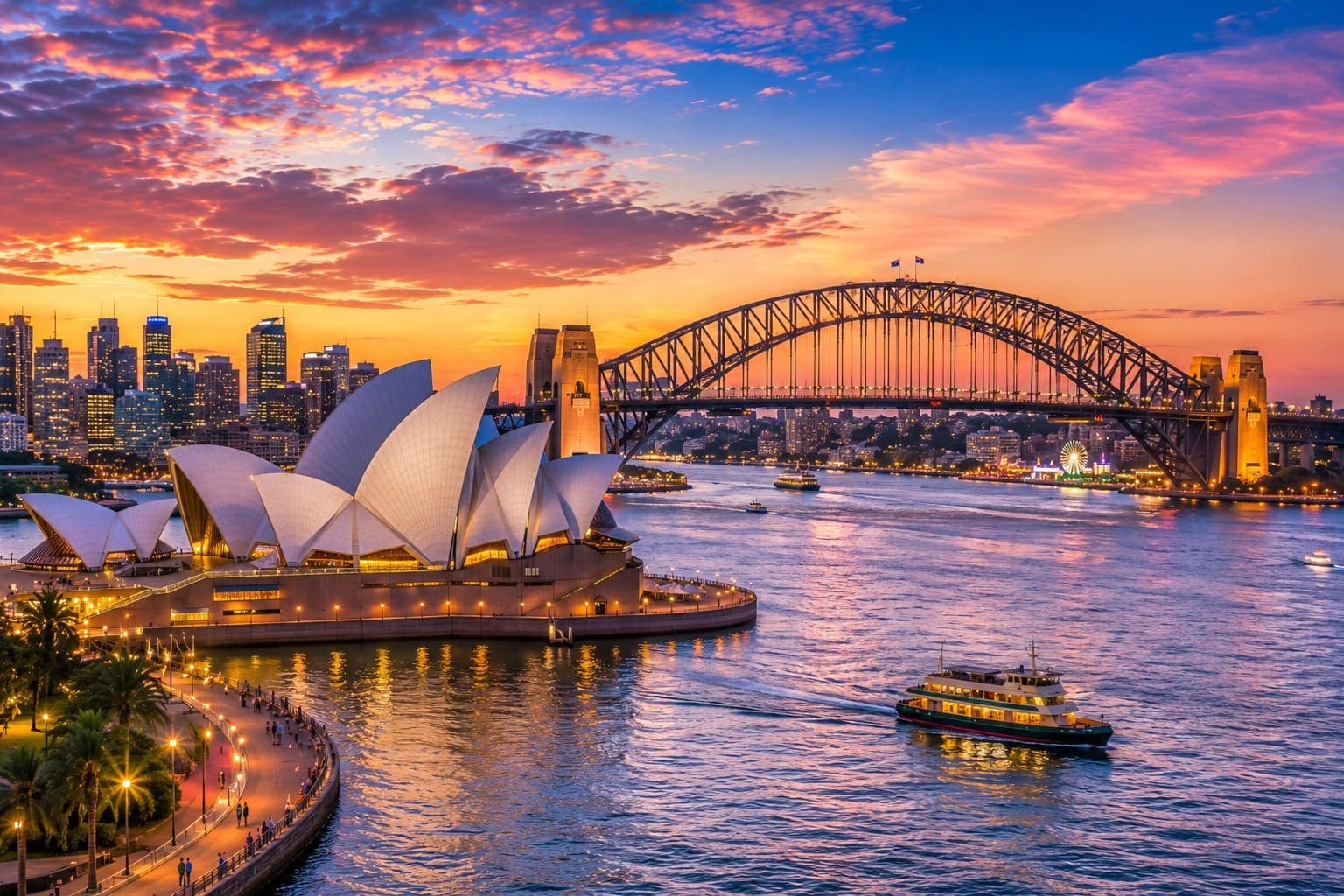
Sydney combines a genuinely stunning harbour setting with a laid-back beach culture that shapes daily life more than most global cities. The Opera House and Harbour Bridge anchor the postcard image, but the coastal walks, ferry rides, and beach neighbourhoods are where a lot of the actual experience happens.
How to Reach Sydney
Sydney Kingsford Smith Airport (SYD) is well connected globally, with a train line direct into the city centre (about 15 minutes to Central Station). Most visitors need an ETA or eVisitor visa, straightforward online applications for most Western passport holders; check Australia's official immigration requirements for your specific passport.
Best Time to Visit Sydney
September to November (spring) and March to May (autumn) offer mild, comfortable weather with fewer crowds than summer. December to February (summer) is warm and popular for beaches, but also peak tourist season and can get quite hot. June to August (winter) is mild by most standards (rarely below 8°C/46°F) and a good time for lower prices and fewer crowds.
Top Areas to Stay in Sydney
CBD/The Rocks — central, walkable to the Opera House and Harbour Bridge, convenient but pricier.
Bondi/Bronte — beach-focused, a bit further from the CBD but close to Sydney's most famous coastline and the Bondi-Coogee walk.
Surry Hills/Darlinghurst — trendy, close to the CBD, strong café and restaurant scene, good for a more local feel.
Manly — across the harbour, reached by a scenic ferry ride, laid-back beach town feel with easy CBD access.
Top Landmarks in Sydney
Sydney Opera House — take a guided tour inside, or simply admire it from Circular Quay or the harbour ferries; a performance is a memorable way to see the interior.
Sydney Harbour Bridge — walk across it for city views, or pay for the BridgeClimb experience to the very top.
Bondi Beach — Sydney's most famous beach, best combined with the coastal walk to Coogee for a half-day outing.
Royal Botanic Garden — right next to the Opera House, a good green space with harbour views.
Taronga Zoo — reached by ferry from Circular Quay, known for harbour-view animal enclosures.
How to Get Around Sydney
Trains and buses cover most of the city efficiently, using an Opal card (tap-on, tap-off). Ferries are both practical transport and a scenic experience — the ferry to Manly is a genuine highlight in its own right. The CBD and inner suburbs are quite walkable.
Food to Try in Sydney
- Fresh seafood — particularly at the Sydney Fish Market, one of the largest in the Southern Hemisphere
- Meat pies — a classic Australian casual food staple
- Flat white coffee — Australia's contribution to global coffee culture, taken seriously in Sydney's café scene
- Multicultural dining — Sydney has strong Asian, Middle Eastern, and Mediterranean food scenes reflecting its diverse population
Shopping in Sydney
- Queen Victoria Building (QVB) — a grand heritage shopping arcade in the CBD
- Paddington Markets — a weekend market for local designers and crafts
- Pitt Street Mall — the main CBD shopping strip
Festivals & Events in Sydney
- Sydney New Year's Eve fireworks — one of the world's most famous NYE displays over the harbour
- Vivid Sydney (May/June) — a light, music, and ideas festival that transforms the city's landmarks with light installations
- Sydney Gay and Lesbian Mardi Gras (February/March) — a major annual parade and festival
Nearby Day Trips from Sydney
- Blue Mountains — about 1.5–2 hours away, known for the Three Sisters rock formation and eucalyptus forest walking trails
- Hunter Valley — around 2 hours away, a major wine region popular for day tours
- Royal National Park — about 1 hour away, one of the world's oldest national parks with coastal walking trails
Local Customs and Etiquette
- Tipping is not expected in the same way as the US — a service charge may already apply, and tipping is generally optional and modest if given at all
- Sun protection — Australia's UV levels are genuinely strong; sunscreen is standard practice even on cooler or cloudy days
- Beach safety — swim between the flagged areas at patrolled beaches, since surf conditions and rips can be genuinely dangerous outside them
A Few Practical Tips
- Budgeting — a hostel bed runs roughly AUD 35–55 ($23–36) a night, mid-range hotels AUD 180–280 ($120–185), and upscale stays upward of AUD 350 ($230+).
- Opal card — get one on arrival for trains, buses, and ferries; it's noticeably cheaper than single tickets.
- Sydney is spread out — factor in ferry and train time between the CBD, beaches, and outer attractions.
FAQ
How many days do you need in Sydney? Three to four days covers the harbour, Opera House, and a beach or two without rushing. Add a day for the Blue Mountains if time allows.
Do I need a visa to visit Sydney? Most visitors need an ETA or eVisitor visa, which are straightforward online applications for most Western passport holders; check Australia's official immigration requirements for your specific passport.
Is Sydney safe for solo travellers? Yes — Sydney is considered one of the safer major cities globally, though standard precautions around alcohol-fueled nightlife areas at night still apply.
Which beach should I visit — Bondi or Manly? Bondi is more central and famous, with the Bondi to Coogee coastal walk nearby; Manly requires a scenic ferry ride and has a more laid-back, less crowded feel.
What's the one thing people skip but shouldn't? The Bondi to Coogee coastal walk — most visitors do Bondi Beach itself and skip this clifftop walking trail connecting several beaches with some of the best coastal views in the city.
HostOps is expanding beyond India — see what's live now
Browse stays →